
AI's Hidden Thirst: Engineering the Water-Neutral Data Centre
AI's Hidden Thirst: Engineering the Water-Neutral Data Centre
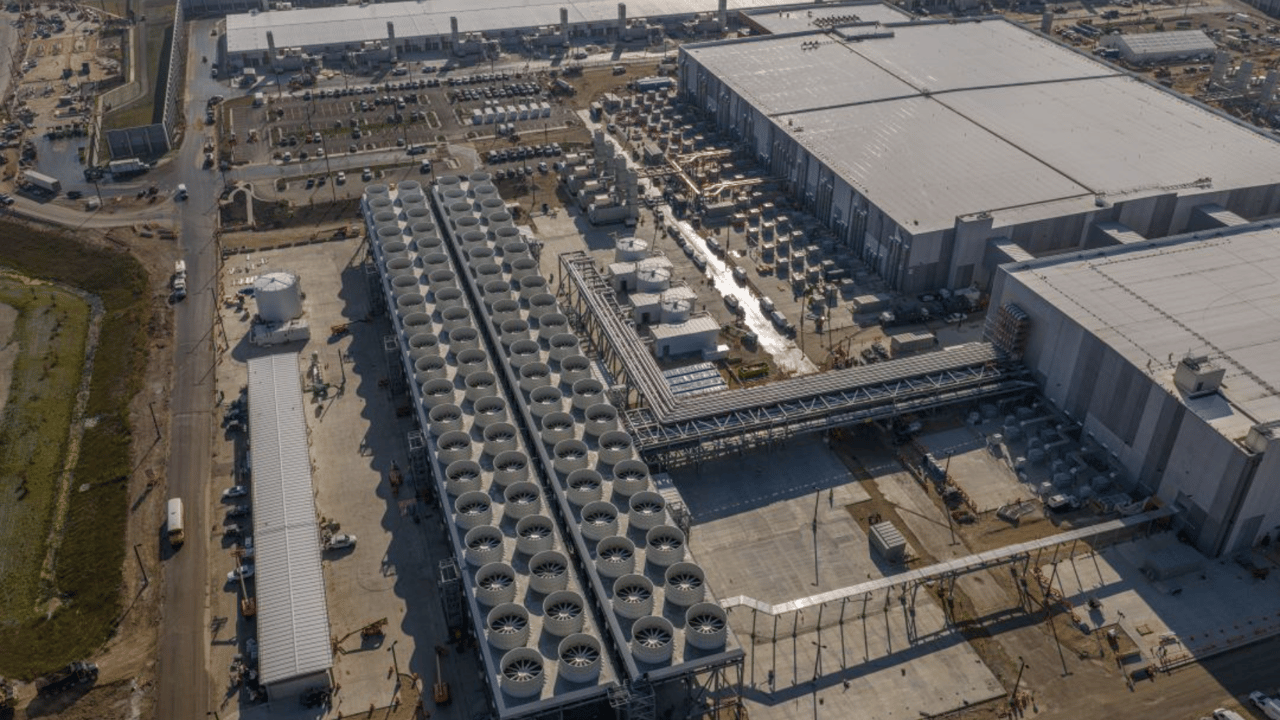
Artificial intelligence has rapidly become the defining infrastructure of the digital economy. Behind every AI prompt, cloud application, and data query lies a vast network of hyperscale data centres operating continuously to process information.
These facilities generate immense heat. Managing this thermal load is one of the most critical engineering challenges in modern computing infrastructure. Traditionally, the solution has been water-based cooling systems, particularly evaporative cooling towers.
However, the rapid growth of AI infrastructure has revealed a major environmental constraint: water consumption.
A medium-sized data centre may consume up to 110 million gallons of water annually, while large hyperscale facilities can require millions of gallons per day for cooling. (Environmental and Energy Study Institute)
In some regions, data centres now compete with municipalities, agriculture, and industry for freshwater resources. At the same time, AI workloads continue to increase thermal densities in server racks, intensifying cooling requirements.
For design consultants, infrastructure planners, and engineers, the challenge is no longer simply cooling servers—it is designing systems that deliver high-performance computing without destabilizing local water systems.
This emerging challenge has given rise to a new design paradigm:
The Water-Neutral Data Centre.
The Thermodynamics of Data Centre Cooling
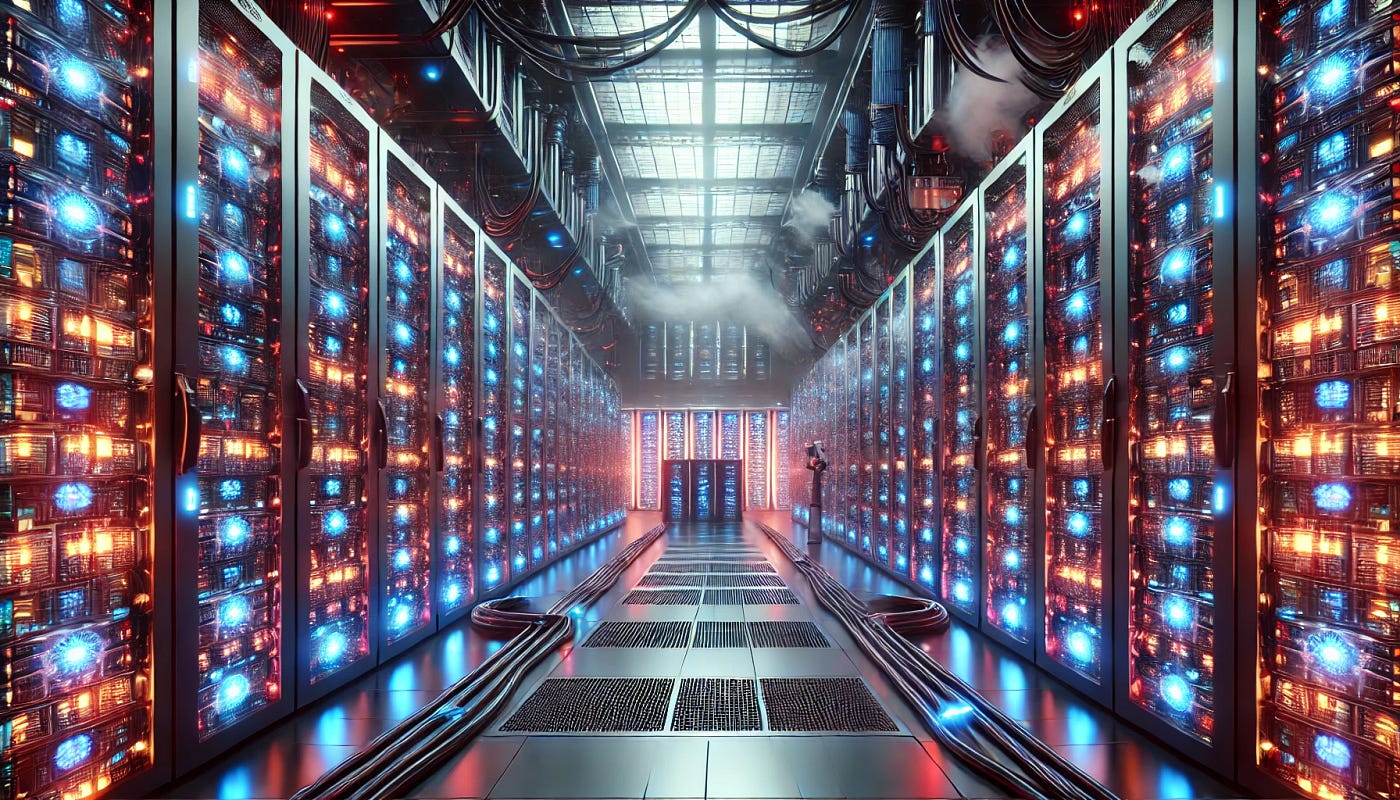
Revolutionizing Data Centre Cooling: Overcoming Water Crisis Through Engineering Innovation
Google data centres consumed 6.1 billion gallons of fresh water in 2023—a 17% increase from the prior year, equivalent to irrigating 41 golf courses annually in the southwestern United States.
Evaporative cooling towers lose 70-80% of water as irrecoverable atmospheric steam. Data centre design consultants must pioneer reclamation strategies, closed-loop technologies, and water-neutral designs to sustain AI infrastructure growth without depleting local watersheds.
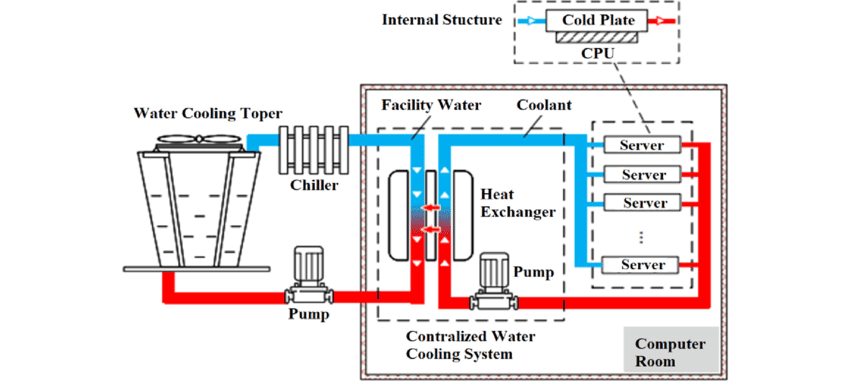
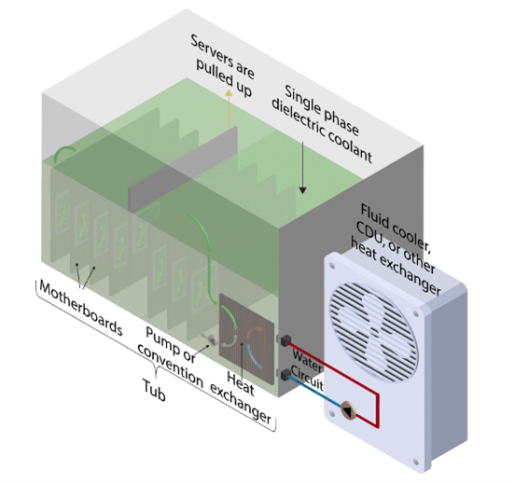
Modern data centres operate thousands of servers in dense racks, with heat loads exceeding 30–130 kW per rack in AI clusters. Heat must be continuously removed to maintain safe operating temperatures.
Three major cooling architectures dominate the industry:
1. Air Cooling
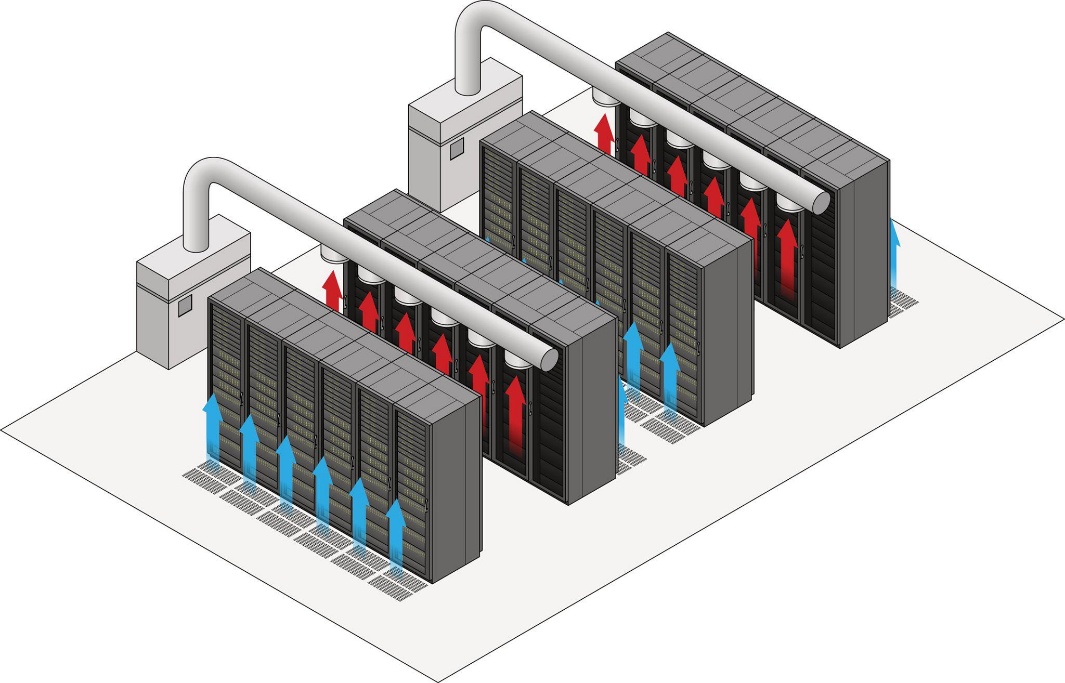
Traditional server rooms rely on CRAC (Computer Room Air Conditioning) units and airflow management. Hot air from servers is separated from cold supply air through hot aisle / cold aisle containment systems.
2. Evaporative Cooling
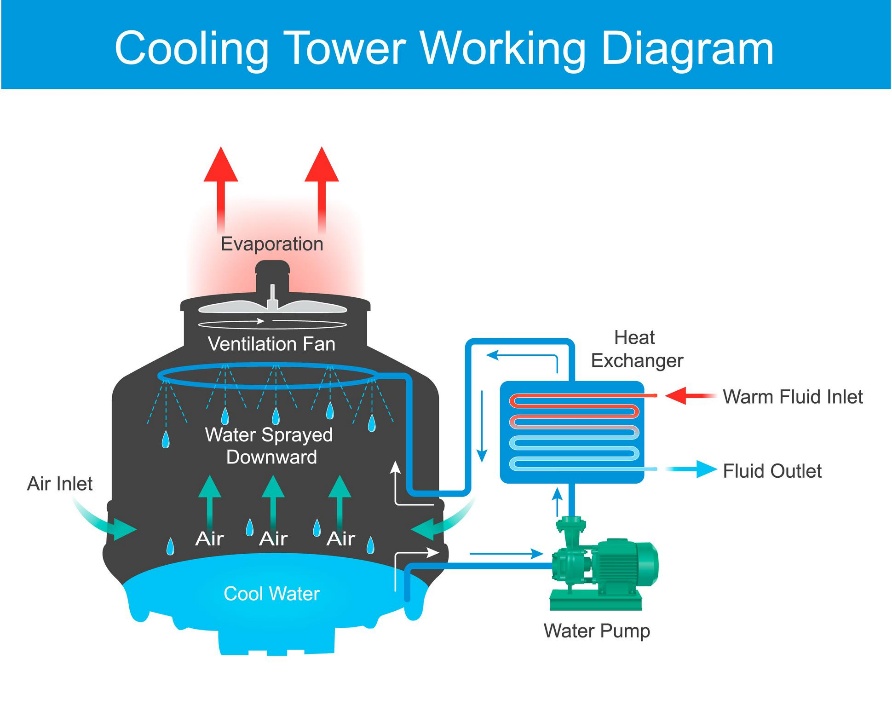
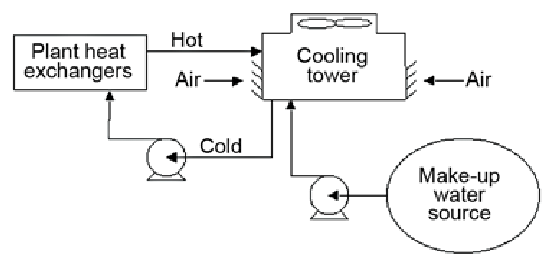
Hyperscale facilities frequently use cooling towers, where water absorbs heat and evaporates to dissipate thermal energy. Evaporative cooling is attractive because it consumes less electricity than purely mechanical refrigeration systems.
Problem Overview
How Evaporative Cooling Fails
Modern data centres generate extreme thermal loads during AI workloads. Water-based evaporative cooling absorbs this heat through phase-change evaporation.
Critical flaw: 70-80% exits as atmospheric steam, irrecoverable within local hydrological cycles. Unlike nuclear power plants that lose only 5% to evaporation while returning warm effluent to source waters, data center cooling towers sever the natural recharge loop.
Scale of the Crisis
- Morgan Stanley forecasts 11-fold water use increase by 2028, reaching 1,068 billion liters annually
- Individual facilities in arid regions like Texas and Arizona consume volumes rivaling 50,000-person municipalities
- Site selection must prioritize hydrological basin capacity over cheap land acquisition
3. Liquid Cooling
High-density AI clusters increasingly use:
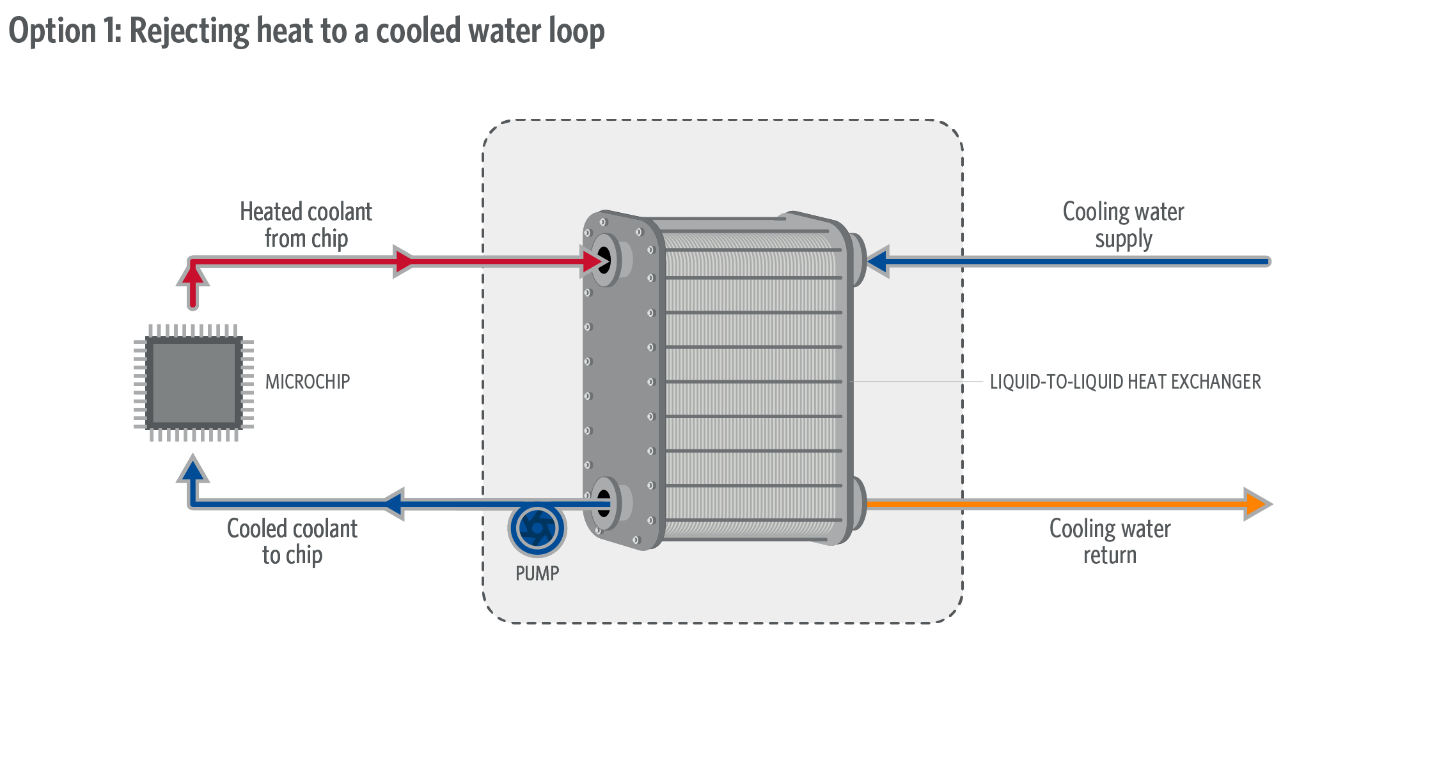
- direct-to-chip liquid cooling
- rear-door heat exchangers
- immersion cooling systems
These approaches remove heat directly at the processor. While thermally efficient, cooling technologies differ dramatically in their water consumption.
The Water Mass Balance of Cooling Towers
The cooling water mass balance equation quantifies the crisis:
For every 1 m³ of makeup water, net consumptive use reaches 0.84 m³ even with aggressive recycling of 0.06 m³ treated blowdown.
Key Performance Metrics
| Component | % of Makeup | Status |
|---|---|---|
| Evaporative Loss | 70-80% | Irrecoverable |
| Blowdown | 10-20% | Scaling control discharge |
| Drift | 0.1-0.2% | Minor droplet carryover |
| Recycle (treated) | 0-40% | RO recovery dependent |
Table 1: Water mass balance components in evaporative cooling systems.
Cycles of Concentration Impact
Cycles of Concentration (CoC) measure water reuse efficiency before mineral scaling forces blowdown discharge:
- CoC=3: 67% makeup reduction baseline
- CoC=7: 86% reduction (engineering sweet spot)
- CoC=10: 90% reduction with high scaling risk requiring intensive pretreatment.
Global Projections
Scientific modeling warns of 7-fold global water use growth by 2050 under business-as-usual scenarios. Blue water consumption (surface and groundwater) dominates operational footprints, with U.S. data centers consuming 17 billion gallons directly plus 211 billion gallons indirectly through power generation in 2023.
GR2M hydrological modeling (Nash-Sutcliffe Efficiency 0.75-0.90) provides essential basin-scale forecasting capability.
Current Challenges
Chemistry Barriers
Evaporation concentrates dissolved minerals—particularly calcium, magnesium, and silica—into limescale deposits that:
- Insulate heat exchanger surfaces, reducing thermal transfer efficiency
- Clog pumps and distribution piping
- Destroy system performance over operating lifecycles.
Recycled water exacerbates corrosivity challenges. Less than 1% of U.S. water receives recycling treatment, and cities lack industrial delivery infrastructure for non-potable supplies.
Economic Reality
On-site pretreatment systems including reverse osmosis and ion exchange cost $0.50-2.50 per cubic meter, frequently exceeding municipal potable water economics and perpetuating fresh water dependence.
Regulatory Fragmentation
State permitting requirements vary dramatically, while public perception barriers hinder wastewater adoption. Arid climates limit dry cooling alternatives' thermodynamic efficiency, demanding system oversizing with 5-10% partial Power Usage Effectiveness (pPUE) penalties.
Consultants must quantify total cost of ownership, balancing capital expenditure against long-term water scarcity risks and regulatory exposure.
Reclamation Strategies
Blowdown Treatment for Immediate Gains
Reverse osmosis treatment of cooling tower blowdown offers fastest return on investment:
- Pretreatment: Remove calcium, magnesium, and silica ions
- RO Processing: Achieve 75-80% water recovery rates
- Recirculation: Enable CoC=10 operation with managed scaling risk
Net impact: 30-40% makeup water reduction with treatment costs offset by lower makeup volumes.
Municipal Wastewater Co-location
Strategic placement adjacent to wastewater treatment plants reduces potable demand by 50-80%. Stormwater and greywater systems supplement reliability during seasonal variations.
| Reclamation Approach | Makeup Reduction | Cost ($/m³) | Complexity |
|---|---|---|---|
| Blowdown RO | 30-40% | 0.5-2.5 | High |
| Wastewater Co-location | 50-80% | Medium | Medium |
| CoC Optimization | 67-90% | Low | Medium |
Table 2: Reclamation strategy performance and economics
These internal recirculation loops address evaporative losses without complete system replacement, delivering quickest ROI for retrofit applications. Although the evaporated water remains in the global hydrological cycle, it is considered consumptive use because it leaves the local watershed. This distinction is critical for water resource planning.
The Water Usage Effectiveness (WUE) Metric
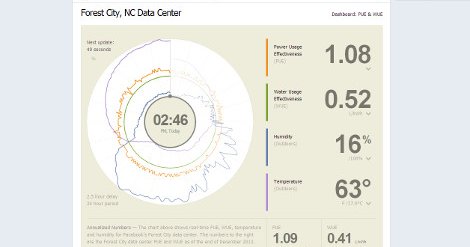
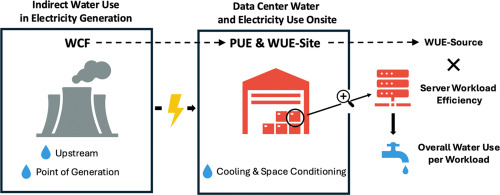
To measure cooling water efficiency, the industry uses the metric:
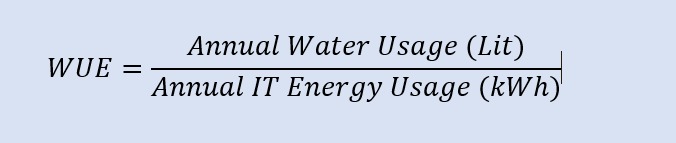
Typical performance ranges:
| Cooling Method | WUE |
|---|---|
| Evaporative towers | 1–4.4 L/kWh |
| High-efficiency facilities | ~0.2 L/kWh |
| Air-cooled facilities | ~0 |
The global average for data centres is approximately 1.8 L/kWh. (Sunbird DCIM).This means a typical facility consumes roughly 1.8 liters of water for every kilowatt-hour of computing energy delivered. For AI-scale computing clusters, this becomes significant.
The Scale of the Emerging Water Crisis
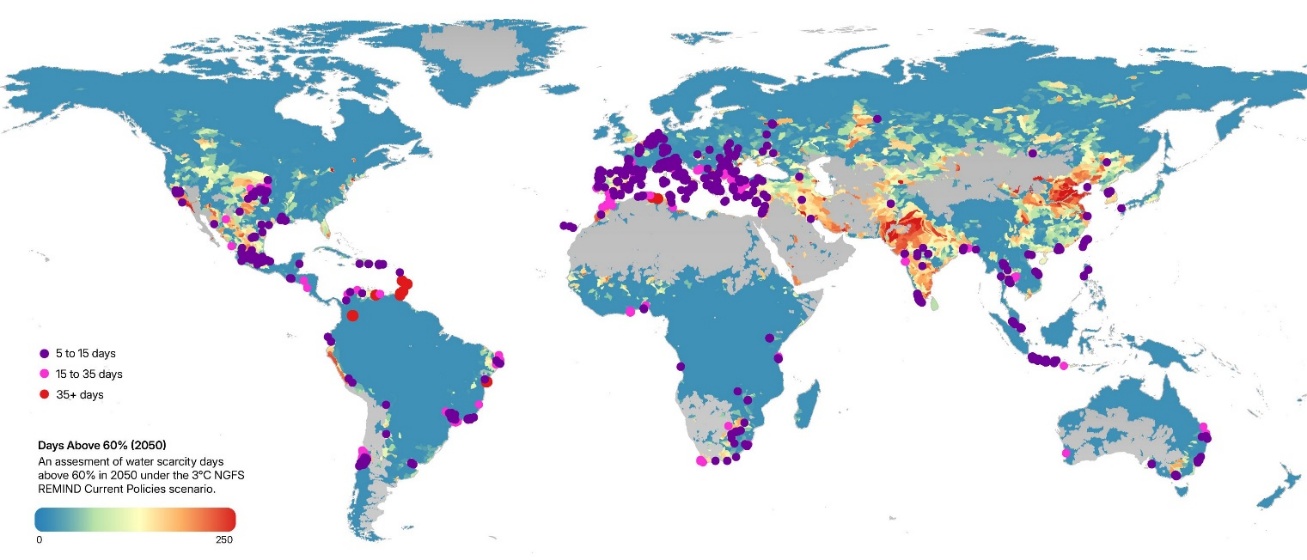
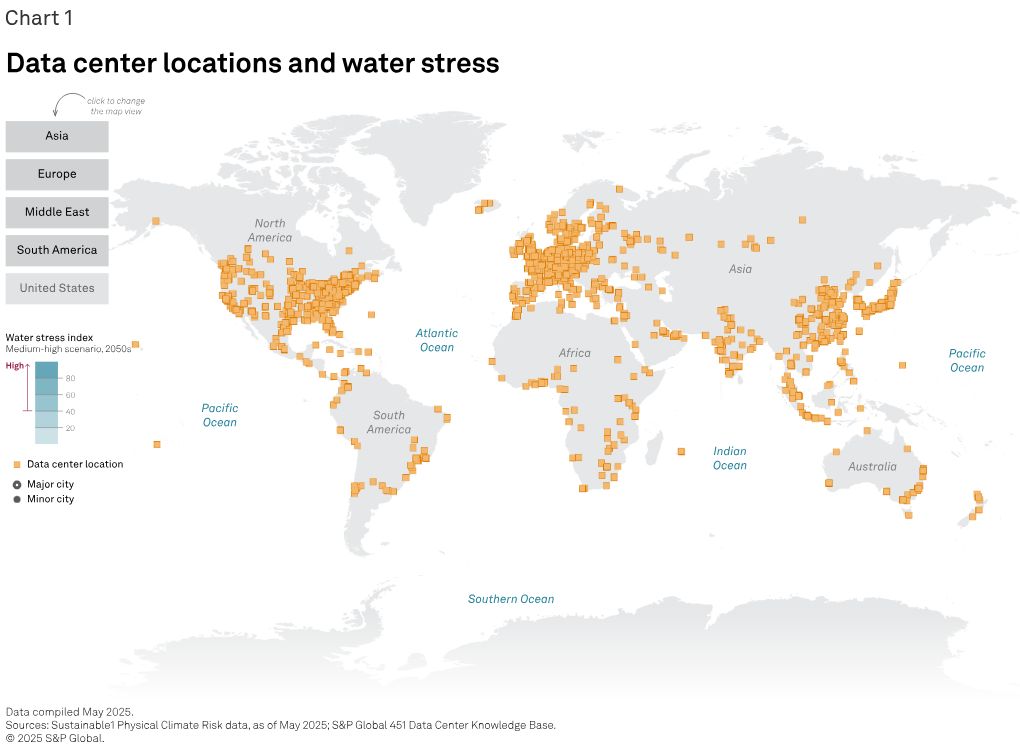
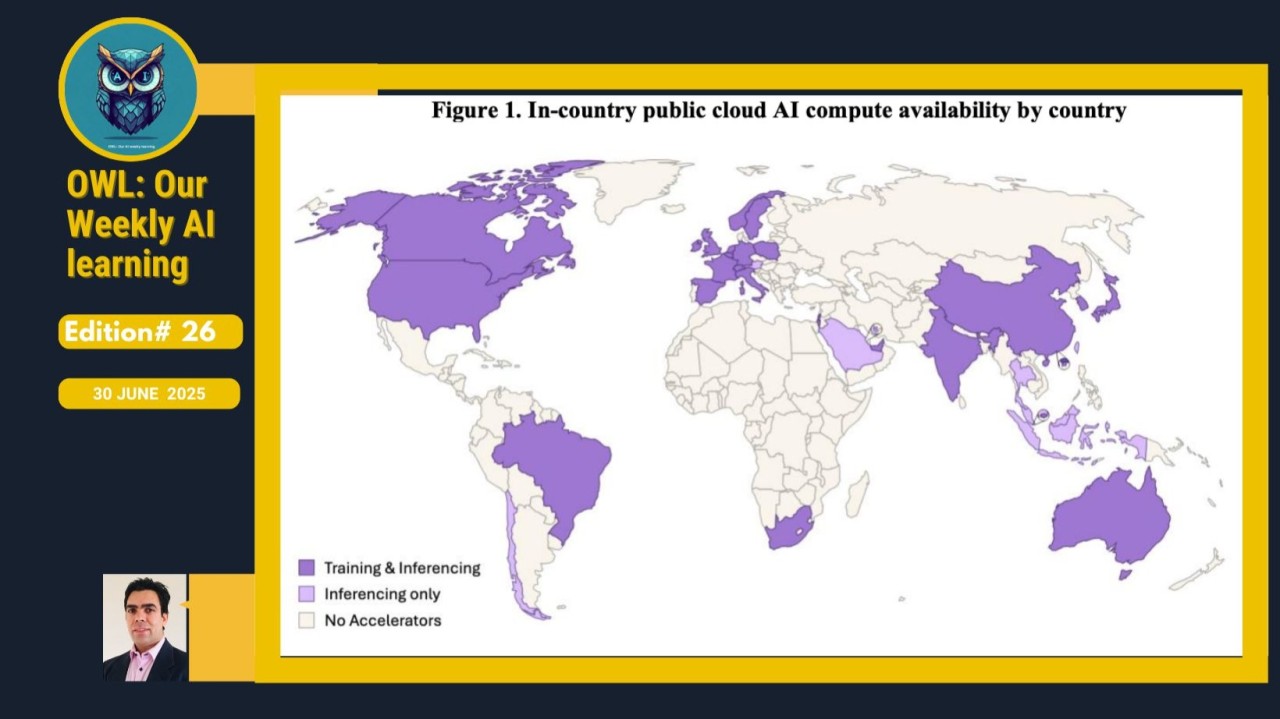
Several converging trends are amplifying the challenge.
Rapid Growth of AI Infrastructure
AI workloads are expected to dramatically increase computational demand. Some projections suggest data centre electricity demand could more than double by 2030 as AI systems scale globally. (arXiv). Since cooling is directly linked to heat load, water use rises proportionally.
Geographic Water Stress
Approximately 40% of U.S. data centres are located in regions experiencing water scarcity, including the southwestern United States. (Business Insider). This creates tension between:
- economic development
- infrastructure expansion
- local water security
Basin-Level Water Constraints
Cooling demand often peaks during hot weather, when municipal water systems already experience high demand. Recent research suggests U.S. data centres could require hundreds of millions of gallons of additional water capacity per day by 2030 if current cooling approaches persist. (arXiv)
Lessons from Thermal Power Plants
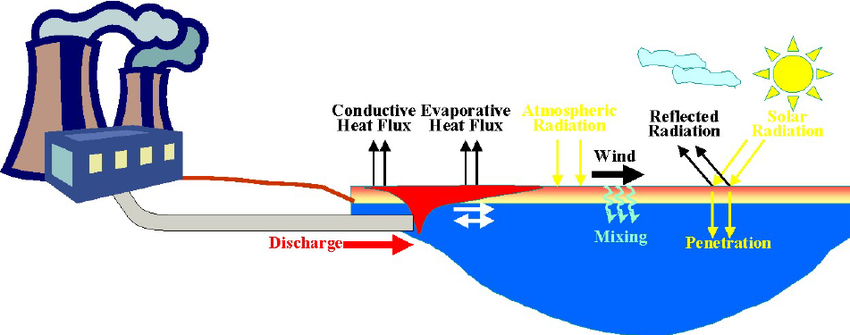
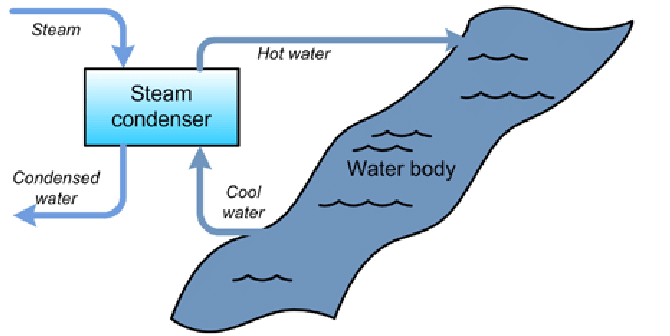
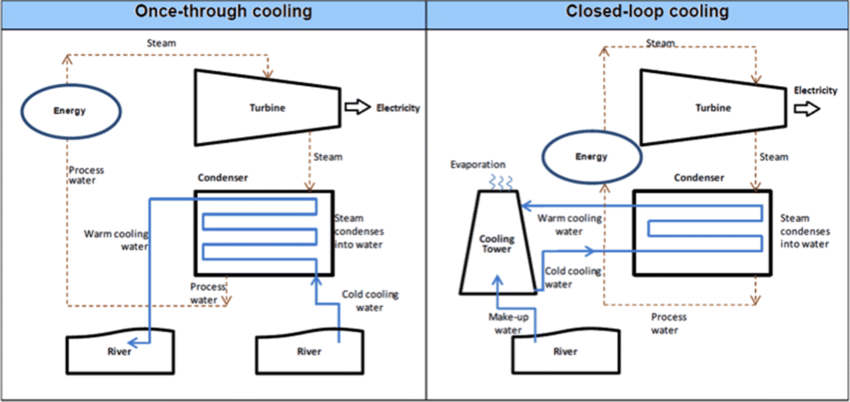
The cooling challenge faced by data centres is not entirely new. Power plants have managed large thermal loads for decades. Two major cooling approaches exist:
Once-Through Cooling
Water is withdrawn from rivers or oceans, used to absorb heat, and returned at slightly higher temperature. Consumptive loss is typically less than 5%.
Cooling Tower Systems
These systems rely on evaporation, similar to data centres. However, thermal plants typically operate with large water bodies, allowing thermal discharge rather than evaporative consumption. The key insight for data centre engineers is that high heat flux does not necessarily require high consumptive water loss. Alternative cooling architectures can drastically reduce water demand.
Engineering Solutions for Water-Neutral Data Centres
1. Internal Water Recycling
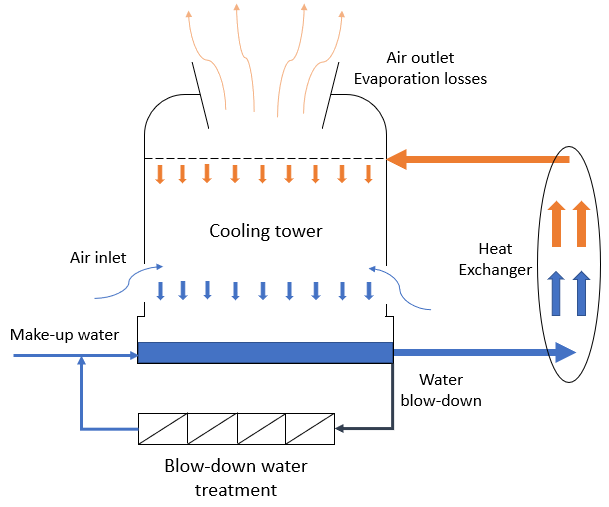
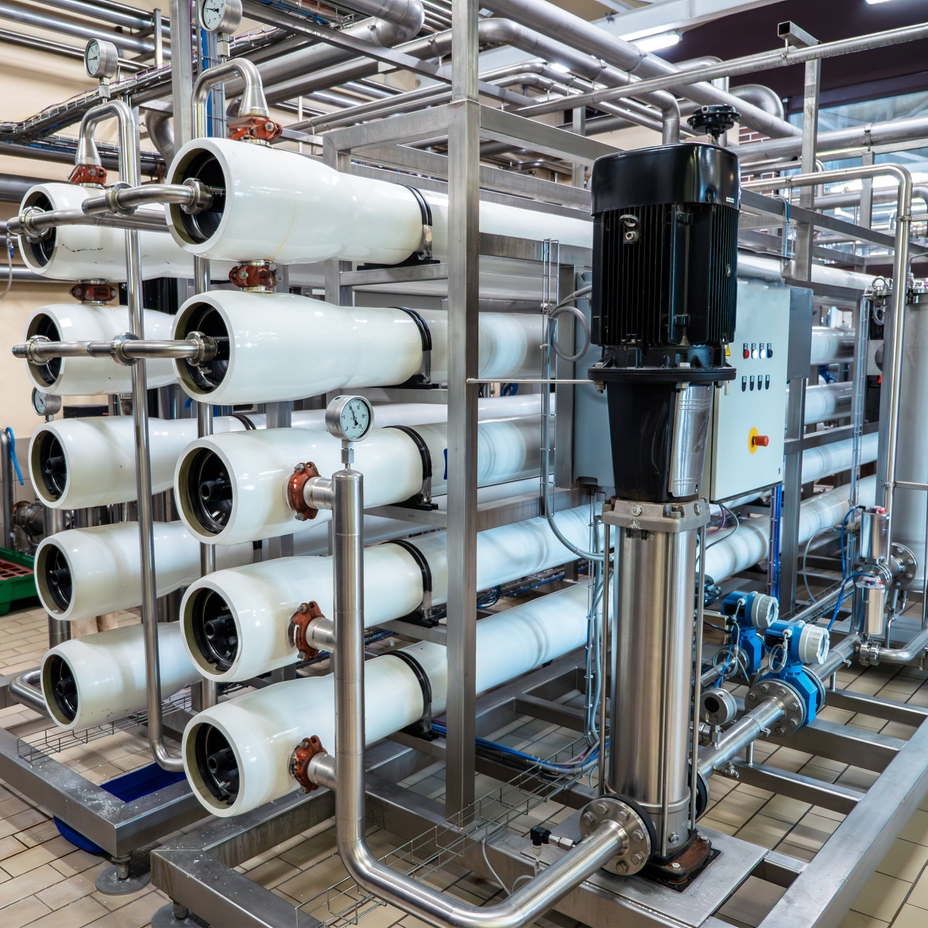
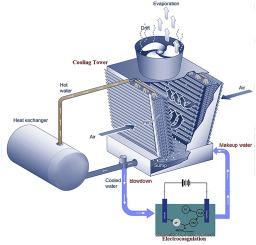
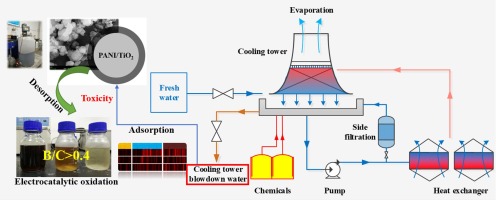
Cooling tower blowdown water contains elevated mineral concentrations that cause scaling.
Modern treatment systems can recover water through:
- reverse osmosis
- membrane filtration
- ion exchange
- softening processes
Recovery rates of 70–80% are achievable. This allows 30–40% reduction in freshwater makeup demand.
2. Municipal Wastewater Reuse
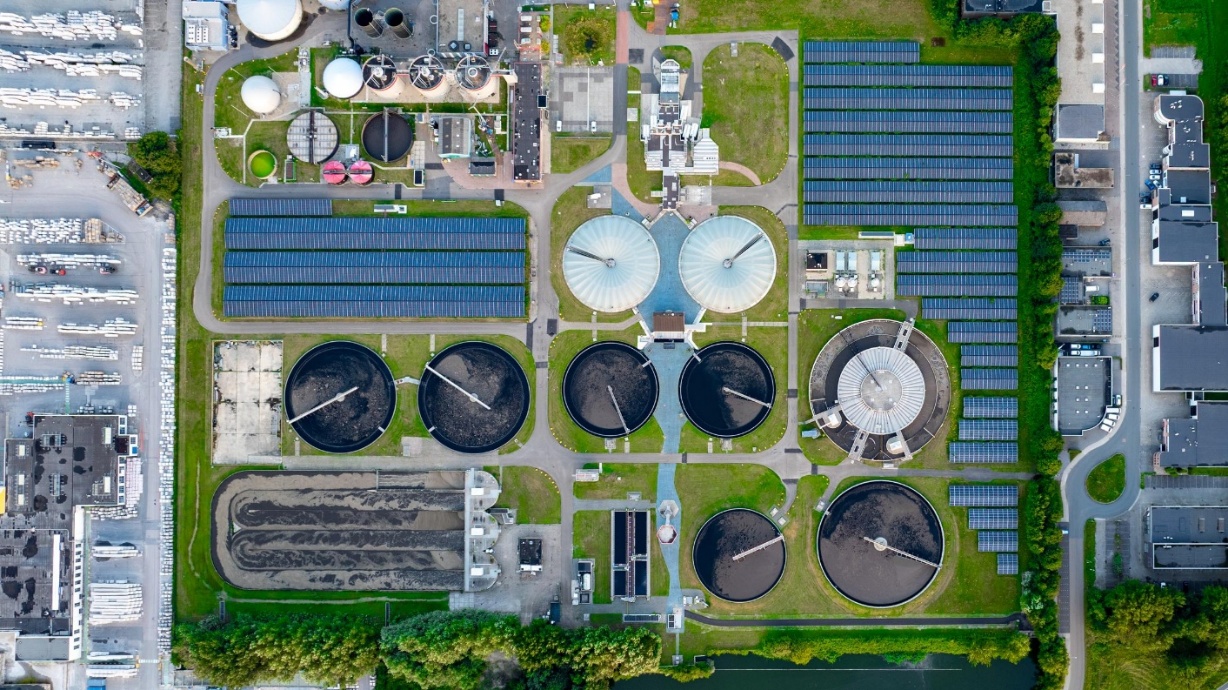
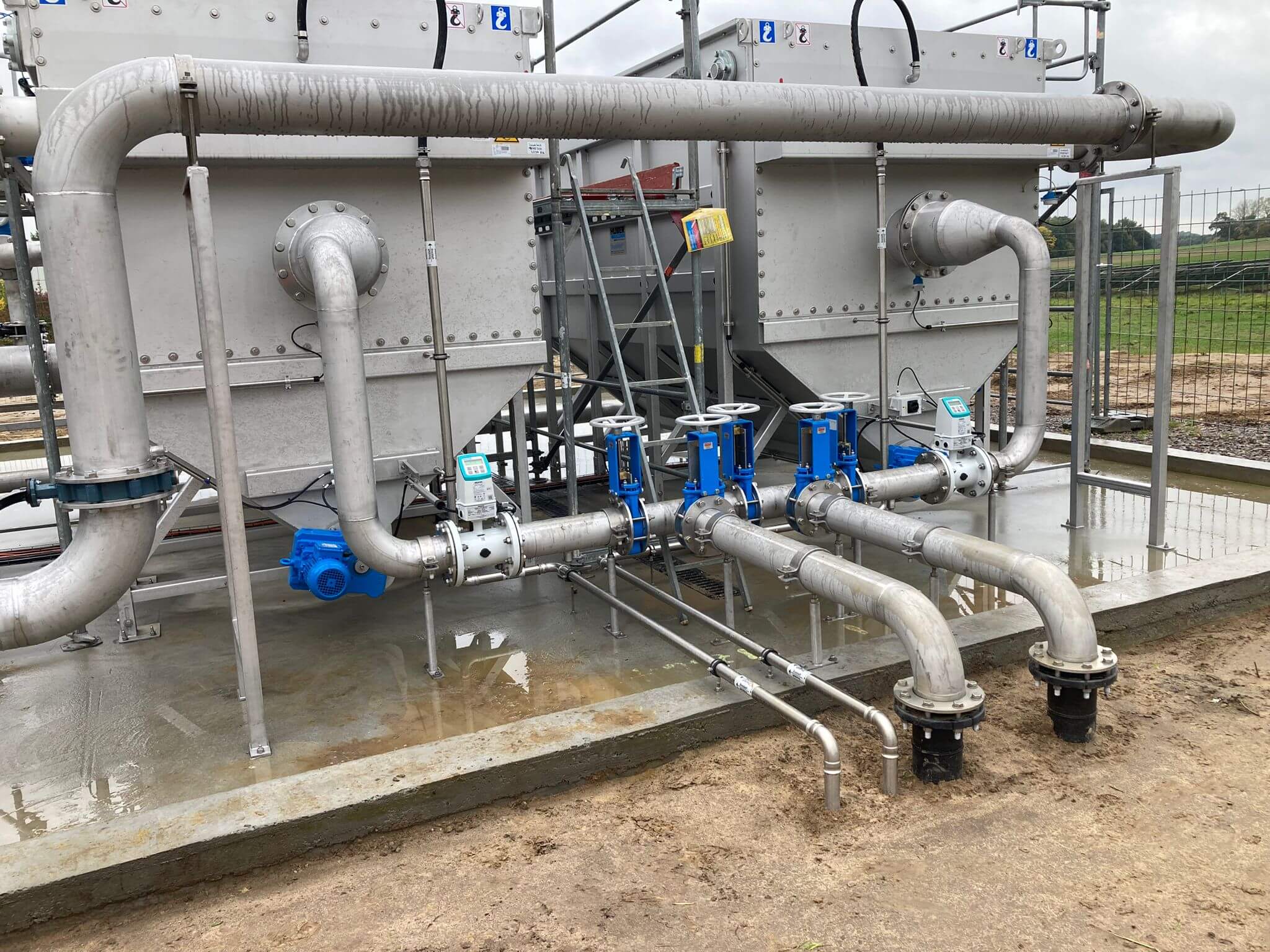
One of the most effective strategies is to use reclaimed municipal wastewater instead of potable water. A notable example is the Quincy Water Reuse Utility in Washington State. This facility treats cooling water from a hyperscale data centre and recycles it back to the facility, significantly reducing dependence on groundwater supplies. (US EPA). The project demonstrates how industrial water reuse can support digital infrastructure while protecting local water resources. Other municipalities are adopting similar strategies by building reclaimed water distribution networks dedicated to data centres.
3. Zero-Water Cooling Technologies
| Technology | Water Use | WUE (L/kWh) | Key Limitation |
|---|---|---|---|
| Evaporative Tower | High | 1-9 | 80% evaporative loss |
| Closed-Loop | Low | $\sim$1 | Pump energy penalty |
| Dry Air Cooler | Zero | 0 | Fan load, climate limited |
| Immersion Cooling | Zero | 0 | Hardware compatibility |
Table 3: Cooling technology water usage effectiveness comparison
Closed-loop liquid cooling recirculates refrigerant or dielectric fluids, achieving WUE approximately 1 L/kWh versus evaporative towers' 1-9 L/kWh range.
Dry air coolers eliminate water entirely through sensible heat transfer, though fan power consumption increases in hot ambient conditions.
Immersion and direct-to-chip systems combined with nuclear-inspired Reactor Vessel Auxiliary Cooling System (RVACS) passive designs approach zero water consumption.
Hybrid Optimization
Seasonal hybrid configurations optimize performance: wet cooling towers supplement dry coolers during peak temperatures, achieving 33 million gallon annual savings per facility (ABC Central Texas deployment). Crusoe Energy's Stargate Texas installation confirms scalability: closed-loop direct-to-chip liquid cooling achieves near-zero evaporation versus 10 million gallons per year for equivalent evaporative tower capacity. Design specification target: WUE <0.5 L/kWh for new construction projects. The most transformative innovation is water-free cooling architecture.
Examples include:
- Direct-to-Chip Liquid Cooling: Coolant circulates directly through microchannels on processors.
- Immersion Cooling: Servers operate submerged in dielectric fluids.
- Dry Air Cooling: Large heat exchangers reject heat to ambient air.
While these technologies increase electrical consumption for fans or pumps, they eliminate evaporative water loss entirely.
Case Studies in Sustainable Cooling
Microsoft Quincy, Washington
Microsoft deployed a dedicated water reuse utility serving its Quincy data center campus:
- Capacity: Treats cooling tower blowdown on-site
- Annual savings: 138 million gallons
- Economic impact: Groundwater pressure relief attracted additional industrial tenants to region
Loudoun Water, Virginia - Broad Run Facility
The Broad Run Water Reclamation Facility supplies 50 million gallons per day of tertiary-treated wastewater to multiple Northern Virginia data center campuses:
- Federal investment: $223 million EPA funding
- Infrastructure: Advanced treatment + dedicated distribution piping
- Regulatory framework: EPA Water Reuse Action Plan (WRAP) Action 2.21 streamlined permitting
Google Texas Air-Cooling Deployment
Google's Texas facility adopted air-cooling technology, eliminating local fresh water withdrawals to protect community supplies during regional drought conditions.
Economic Validation
Co-location projects demonstrate viable economics. Replicability depends on EPA WRAP-aligned permitting frameworks that reduce approval timelines and regulatory uncertainty. The system demonstrates that closed-loop industrial reuse can sustain hyperscale computing while protecting local aquifers. (US EPA)
Global Industry Trends
Many operators are now adopting region-specific strategies:
- air-cooling in water-stressed regions
- geothermal cooling where feasible
- hybrid wet-dry systems in temperate climates
Cooling decisions made during design can influence water consumption for decades. (Interconnections - The Equinix Blog)
Designing the Water-Neutral Data Centre
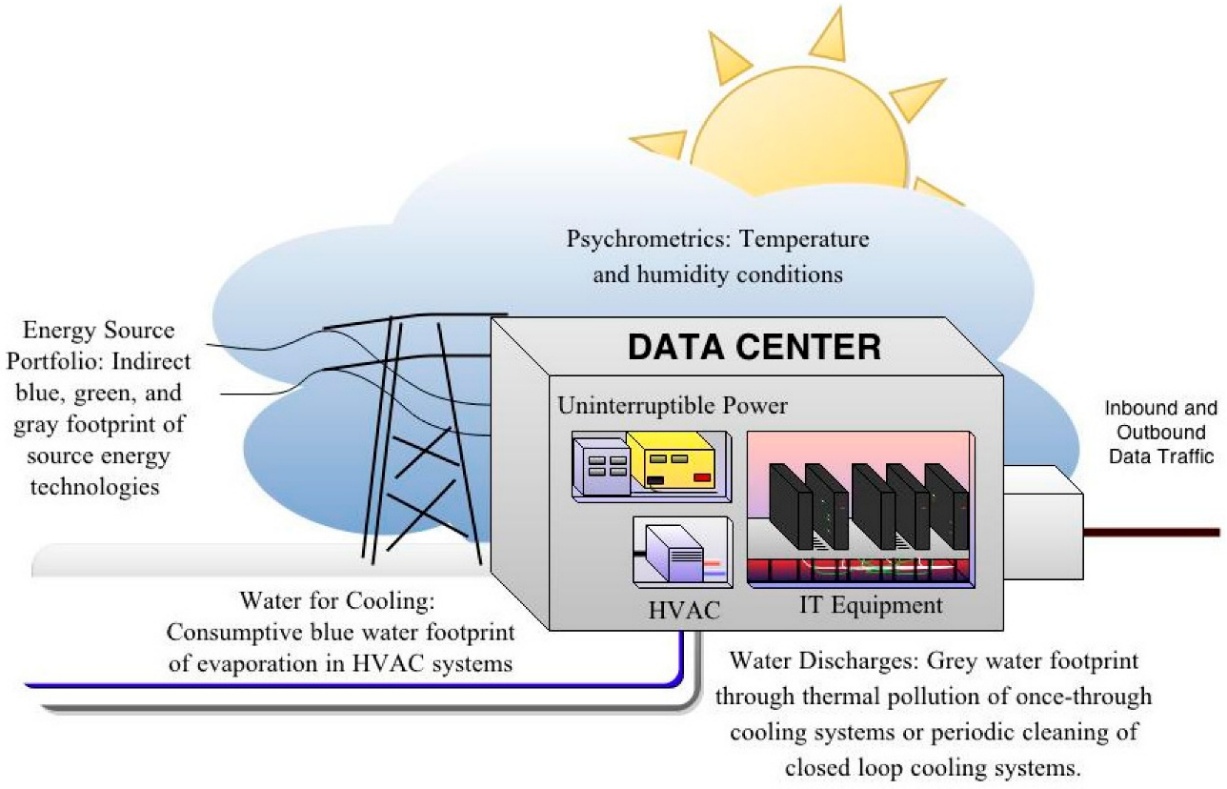
A water-neutral data centre does not necessarily use zero water. Instead, it follows three engineering principles:
- Minimize Direct Water Use: Adopt cooling technologies that reduce evaporative losses.
- Recycle and Reuse Water: Implement advanced treatment systems for internal water recovery.
- Offset Remaining Water Use: Invest in watershed restoration, recharge projects, or municipal water infrastructure improvements.
This approach mirrors carbon-neutral design frameworks, applied to hydrological systems.
Engineering Assumptions Used in This Analysis
Some projections and comparative analyses required assumptions due to incomplete public disclosure of data centre water consumption.
Assumptions include:
| Parameter | Assumption | Basis |
|---|---|---|
| Hyperscale facility load | 100 MW | typical cloud campus |
| Cooling share of water use | 80% | cooling tower industry averages |
| Average WUE | 1.8 L/kWh | industry metric |
| Blowdown recovery | 70% | typical RO system performance |
These values align with engineering data from academic research and industry reports. (Nature)
The Role of Hydrological Site Selection
Water sustainability begins long before cooling equipment is installed.
Site selection should include:
- watershed hydrology modelling
- drought frequency analysis
- groundwater recharge capacity
- competing water demand
Locating data centres near wastewater treatment plants or reclaimed water infrastructure can significantly reduce environmental impacts.
Regulatory Landscape
EPA Water Reuse Action Plan (WRAP)
The Environmental Protection Agency's National Water Reuse Action Plan accelerates industrial adoption:
- Action 2.21: Streamlines data center cooling water reuse permitting processes
- SRF funding: $8.9 billion allocated for water reuse infrastructure projects
- Partnership model: AWS, EPA, and Loudoun Water collaborative demonstration
Emerging Disclosure Requirements
Financial press reporting indicates rising financial disclosure mandates for water consumption and mitigation strategies. Regulators increasingly demand basin-specific stress assessments and local offset programs over global corporate stewardship metrics.
Consultants must embed WRAP compliance requirements in RFPs, anticipating capital expenditure grant availability.
The Future Cooling Architecture
The AI revolution is reshaping global infrastructure.
But the next generation of computing facilities will be defined not only by processing power—but by resource intelligence.
Future data centres will likely combine:
- direct liquid cooling
- closed-loop water systems
- municipal wastewater reuse
- climate-optimized siting
These integrated approaches can dramatically reduce the water footprint of digital infrastructure.
Call to Action
Immediate next steps for data center design consultants:
- Audit current project WUE metrics against 0.5 L/kWh 2028 target
- Deploy GR2M hydrological basin modeling for pending site selections
- Specify closed-loop and hybrid cooling systems in active bid packages
- Engage with regional WWTP operators for co-location feasibility studies
- Share retrofit success metrics and ROI validation data in professional forums. Contact author for parametric analysis support and basin-specific modeling.
Lead the transition to sustainable cooling infrastructure—or accept stranded asset risk in water-stressed markets.
Conclusion — Engineering Leadership in the AI Era
Artificial intelligence is transforming economies, industries, and societies.
Yet the infrastructure enabling this transformation must be designed responsibly.
Cooling systems represent the single largest operational water demand within most data centres. Engineering innovation therefore holds the key to sustainable digital expansion.
By embracing water recycling, zero-water cooling technologies, and hydrology-informed site planning, the industry can move toward a new paradigm:
The Water-Neutral Data Centre.
For data centre design consultants and infrastructure engineers, the opportunity is clear.
The future of digital infrastructure will not be defined solely by computing speed or energy efficiency—but by how intelligently we manage the planet’s most precious resource.

References
- India Today. (2026, February 19). Google data centre's 6-billion-gallon thirst, and why AI's water consumption is a growing environmental concern. https://www.indiatoday.in/science/story/google-ai-data-centre-water-consumption-environmental-impact-fresh-water-cooling-2871047
- User-provided research document compilation on data center water consumption, evaporative cooling systems, reclamation technologies, and hydrological modeling methodologies.
- Times of India. (2026). AI boom may drive data center water use up 11 times by 2028: Morgan Stanley. https://timesofindia.indiatimes.com/business/international-business/ai-boom-may-drive-data-center-water-use-up-11-times-by-2028-morgan-stanley
- ScienceDirect. (Multiple studies). Data center water consumption forecasting and hydrological impact modeling through 2050.
- Lawrence Berkeley National Laboratory. (2023). U.S. data center water consumption analysis: 17 billion gallons direct cooling plus 211 billion gallons indirect via power generation.
- Crusoe Energy. (2024). Stargate Texas facility deployment: Closed-loop direct-to-chip liquid cooling performance validation. https://www.crusoe.ai
- Microsoft. (2024). Quincy, Washington data center water reuse utility case study. https://datacenters.microsoft.com
- U.S. Environmental Protection Agency. (2023). Water Reuse Action Plan (WRAP) Action 2.21: Data center cooling water reuse permitting framework and Loudoun Water Broad Run facility case study.
- Google. (2024). Texas data center air-cooling deployment and community water protection initiative.
- Journal of Cleaner Production. (2024). Global data center water footprint projections: 7-fold increase by 2050 under business-as-usual scenarios.
- Morgan Stanley. (2024). AI Infrastructure Report: Scope 1-3 water footprints and stress area analysis.
- Financial Times. (2024). Corporate water disclosure requirements and data center environmental reporting trends.
- EPA. (2023). Quincy, Washington case study: Microsoft wastewater treatment utility and groundwater conservation.